Jewish Museum of Thessaloniki
History of the Building
The Jewish Museum of Thessaloniki opened to the public in 2001. It is a new institution, tasked with studying and preserving the memory of the Jewish presence in Thessaloniki. This presence dates back centuries. Thessaloniki is mentioned in the New Testament thanks to its Jewish community, where Paul came to teach 2,000 years ago. Thus, a new institution must highlight an ancient, multifaceted, and dramatic history, the culmination of which was the extermination of the majority of the city’s Jewish population during World War II.
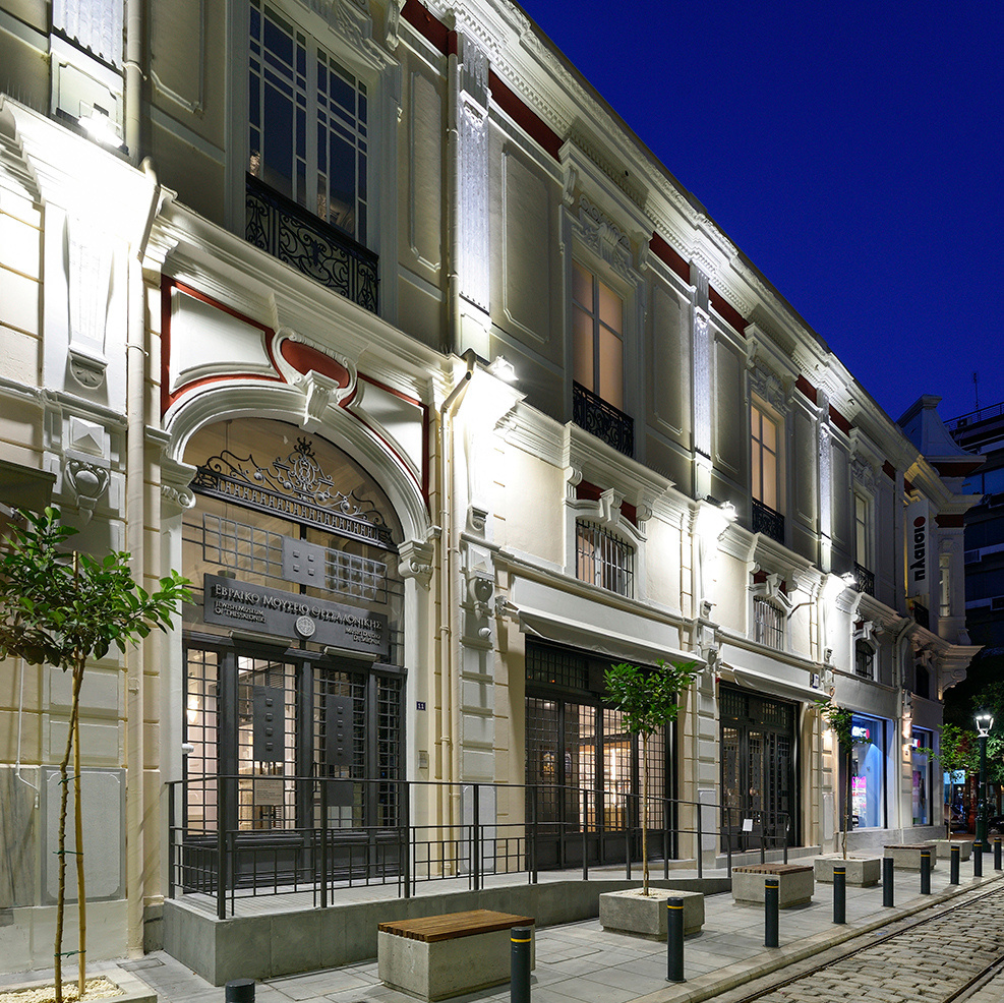
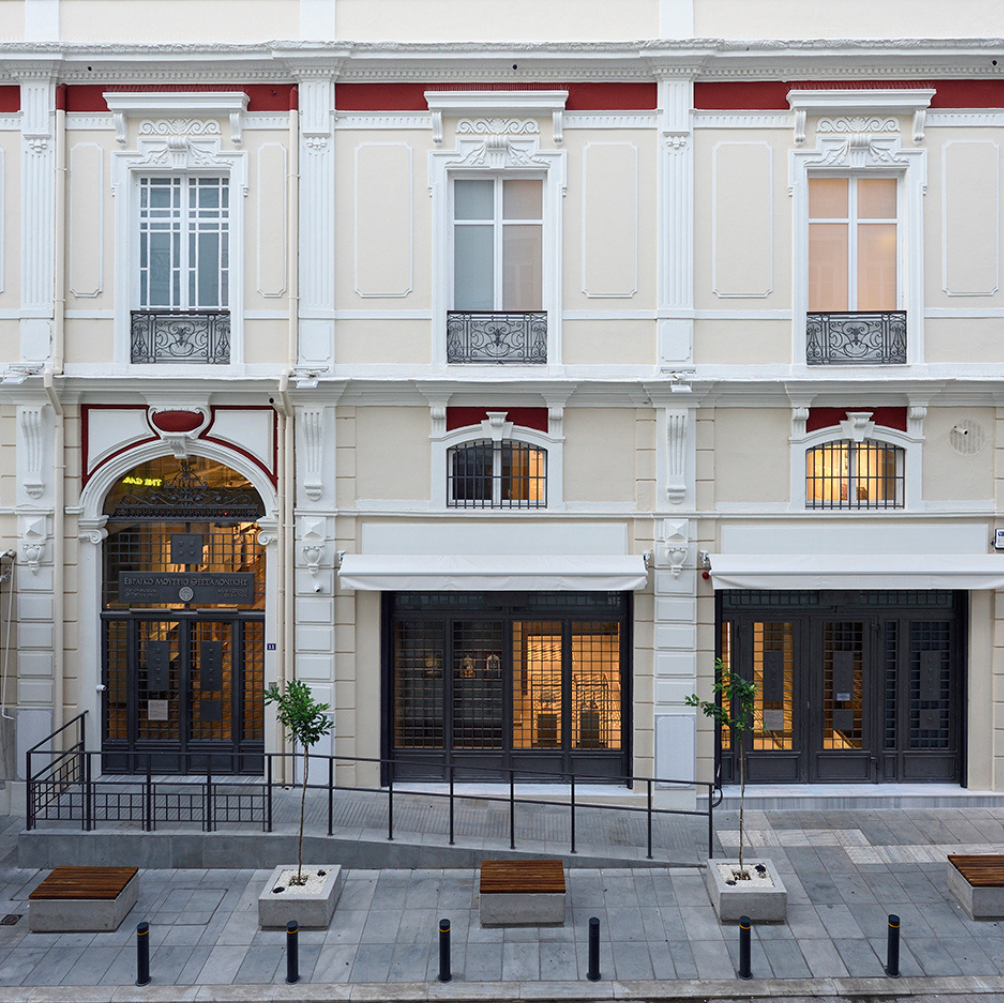
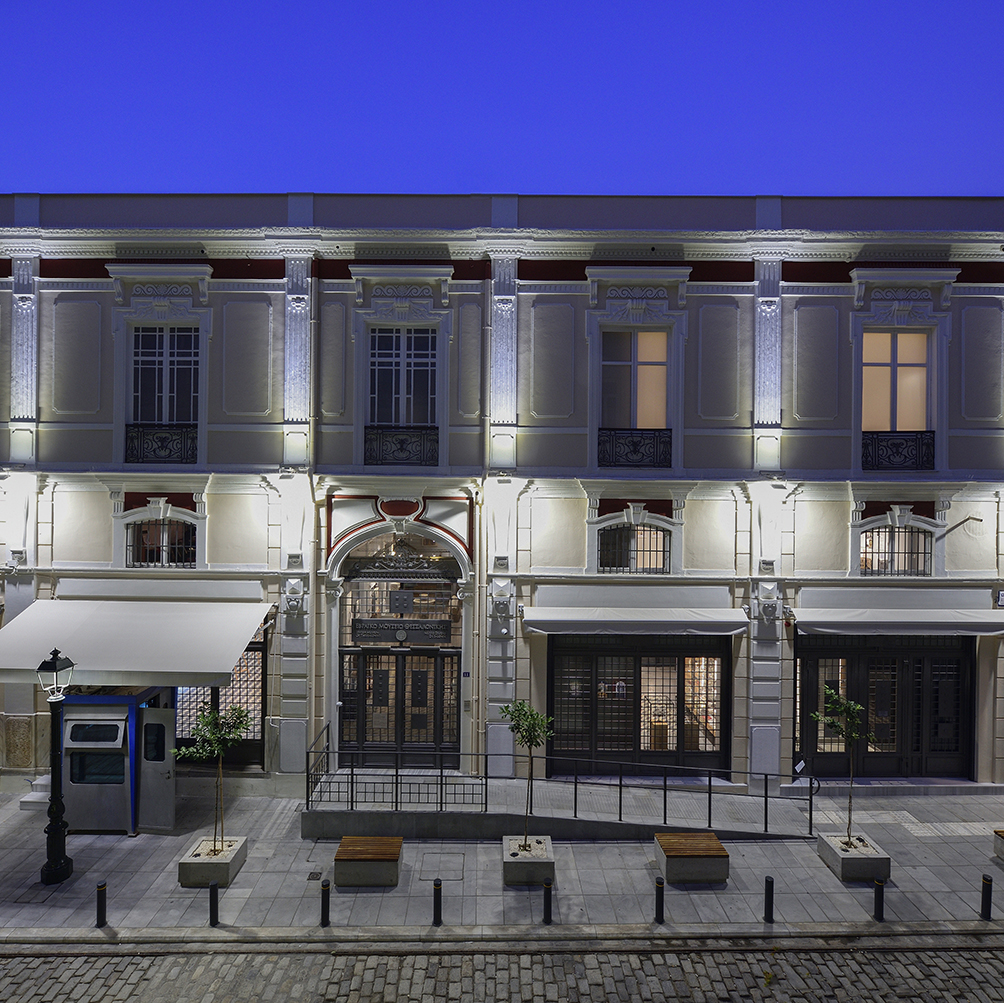
The Jewish Museum building was erected in 1904 and has always belonged to the Jewish Community of Thessaloniki.
It is one of the few buildings in the city center that survived the great fire of 1917 and the reconstruction that followed.
Before becoming a museum, the building functioned as a commercial arcade, one of the typical commercial arcades built between 1880 and 1910 in the center of Thessaloniki to house new businesses.
The building housed the Bank of Athens (1906-1925) and the newspaper L’Independent, which was published in Thessaloniki from 1909 to 1941.
The Jewish Museum of Thessaloniki: From Reconstruction to Cultural Symbol
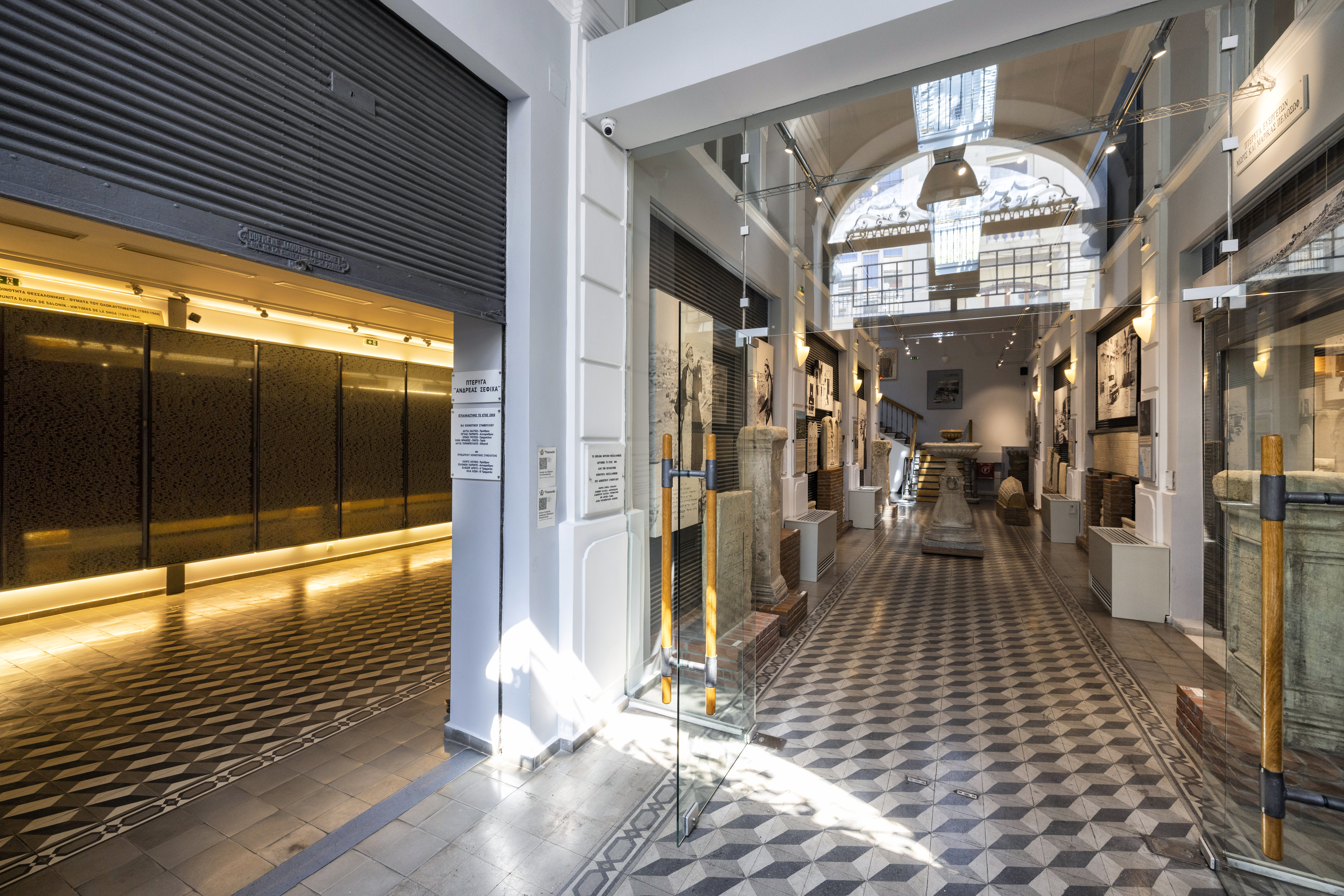
Extensive work was required to convert the building into a museum, which was financed by the Thessaloniki 1997 Cultural Capital Organization. The Ministry of Culture also contributed. Many donors, families, and businesses contributed to the operation of the museum, whose names are recorded on a plaque displayed at the museum entrance.
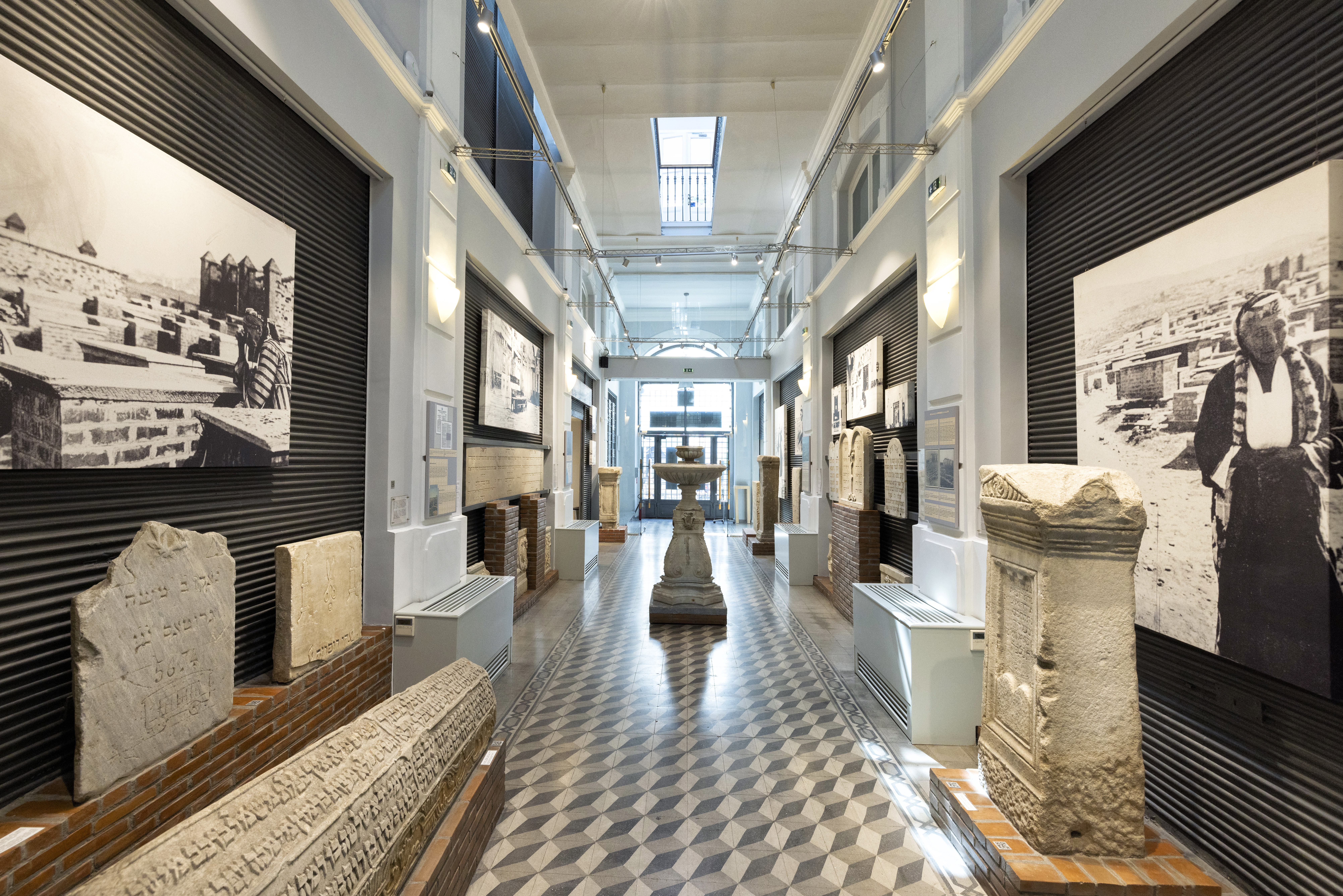
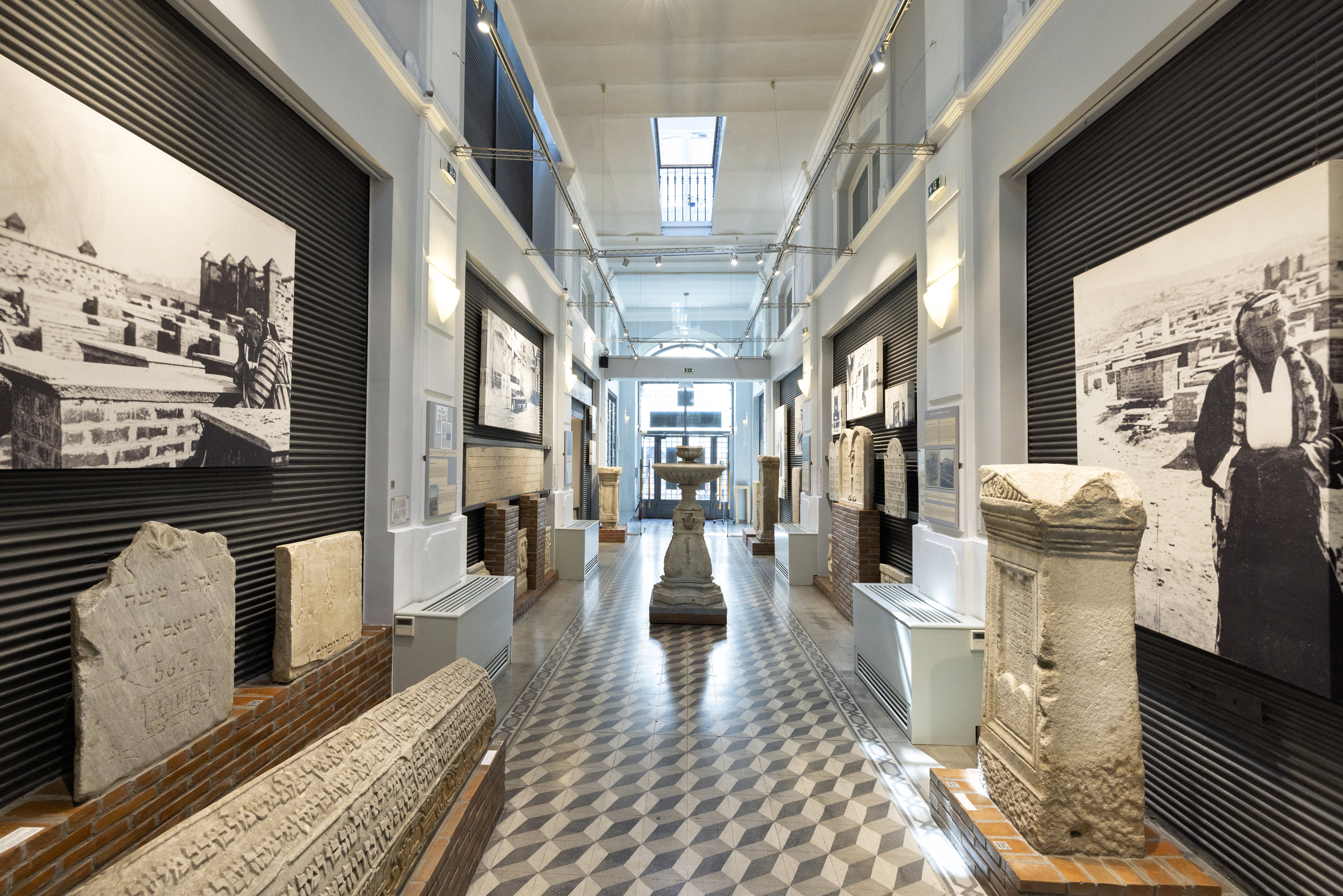
The main exhibition space of the Museum extends over two floors.
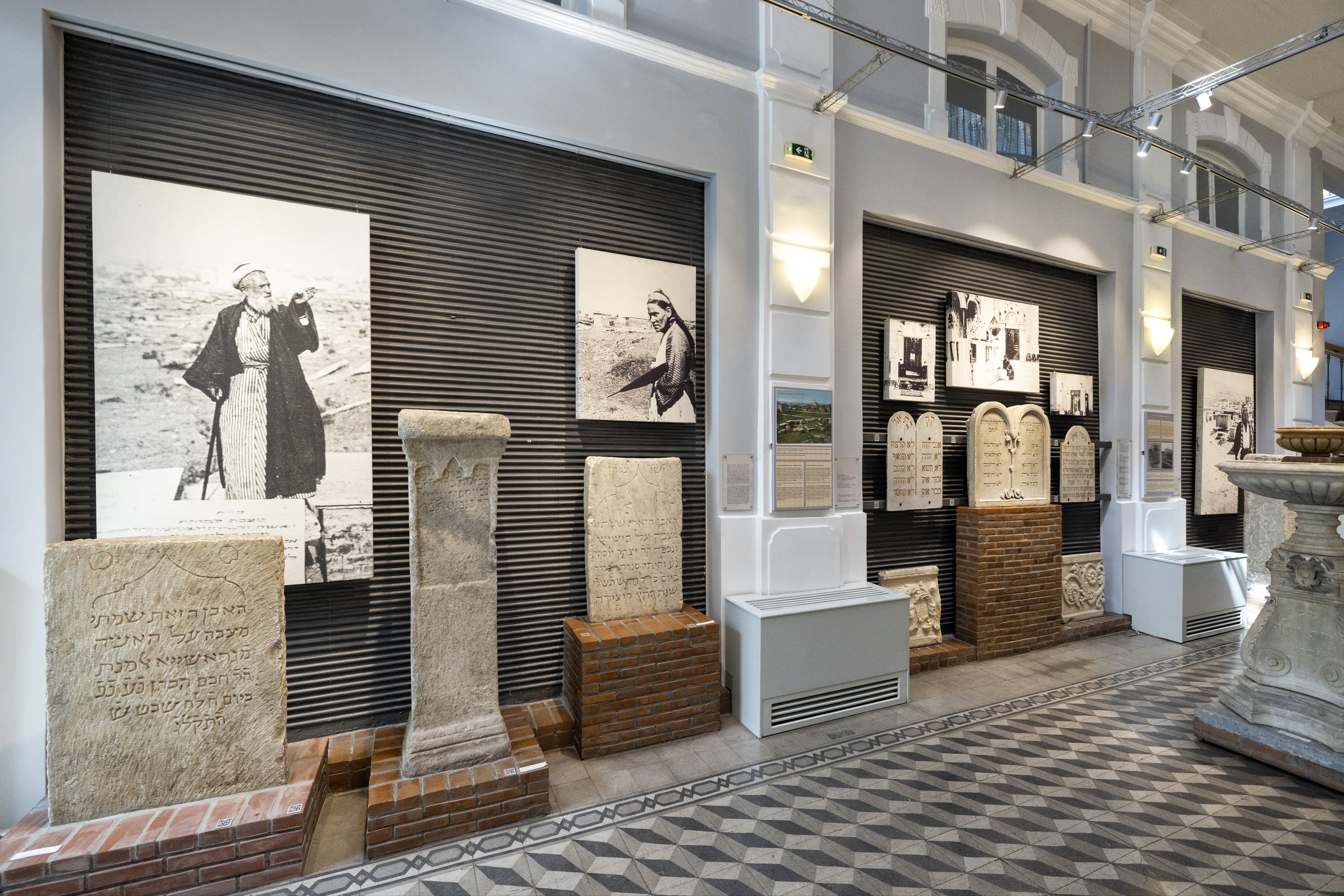
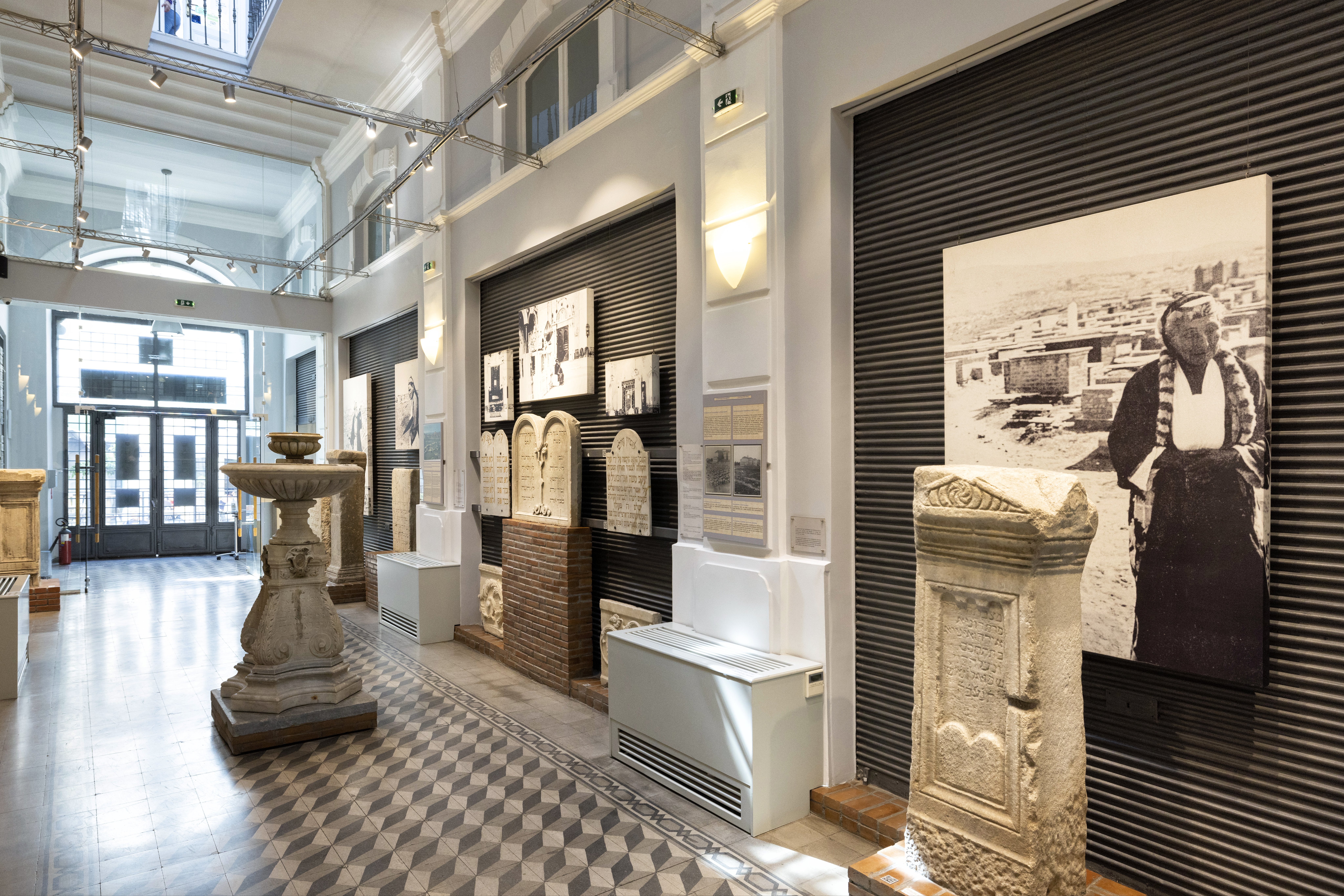
The ground floor is dedicated to the old Jewish cemetery of Thessaloniki, which was located on the site now occupied by the University, probably from the 15th century onwards.
On the upper floor, in the Simon Marks wing, there is a permanent exhibition entitled “Thessaloniki, Metropolis of Sephardism,” similar to the one at Kibbutz Beth Lohamei Agetaoth in Israel, which includes information on the history of Judaism in Thessaloniki and the areas of activity that were interrupted by the Holocaust.
To the left of the main exhibition space is the museum’s new wing, dedicated to Andreas Sefichas. The ground floor hosts temporary exhibitions, while the upper floor houses a permanent exhibition on Jewish communities in northern Greece.
The Jewish Museum of Thessaloniki has the following collections: Tombstones from the destroyed Jewish Cemetery, building elements from synagogues demolished by the German occupation authorities, religious objects, old and rare books in the Hebrew language, pre-war and rare local newspapers, family heirlooms, ketubot, public and private documents relating to World War II, private letters, clothing (19th and 20th centuries), carpets, fabrics, tablecloths, aprons, objects from concentration camps, engravings and paintings, accounting books and deposit books (until 1940). The Museum also has the only existing collection of pre-war family and school photos from private collections. These collections have been put together entirely through donations, which are still coming in. Thessalonian Jews from all over the world or visitors to the museum donate objects, family heirlooms, correspondence, documents of their ancestors, etc., in the belief that these will find their rightful place in the Museum.
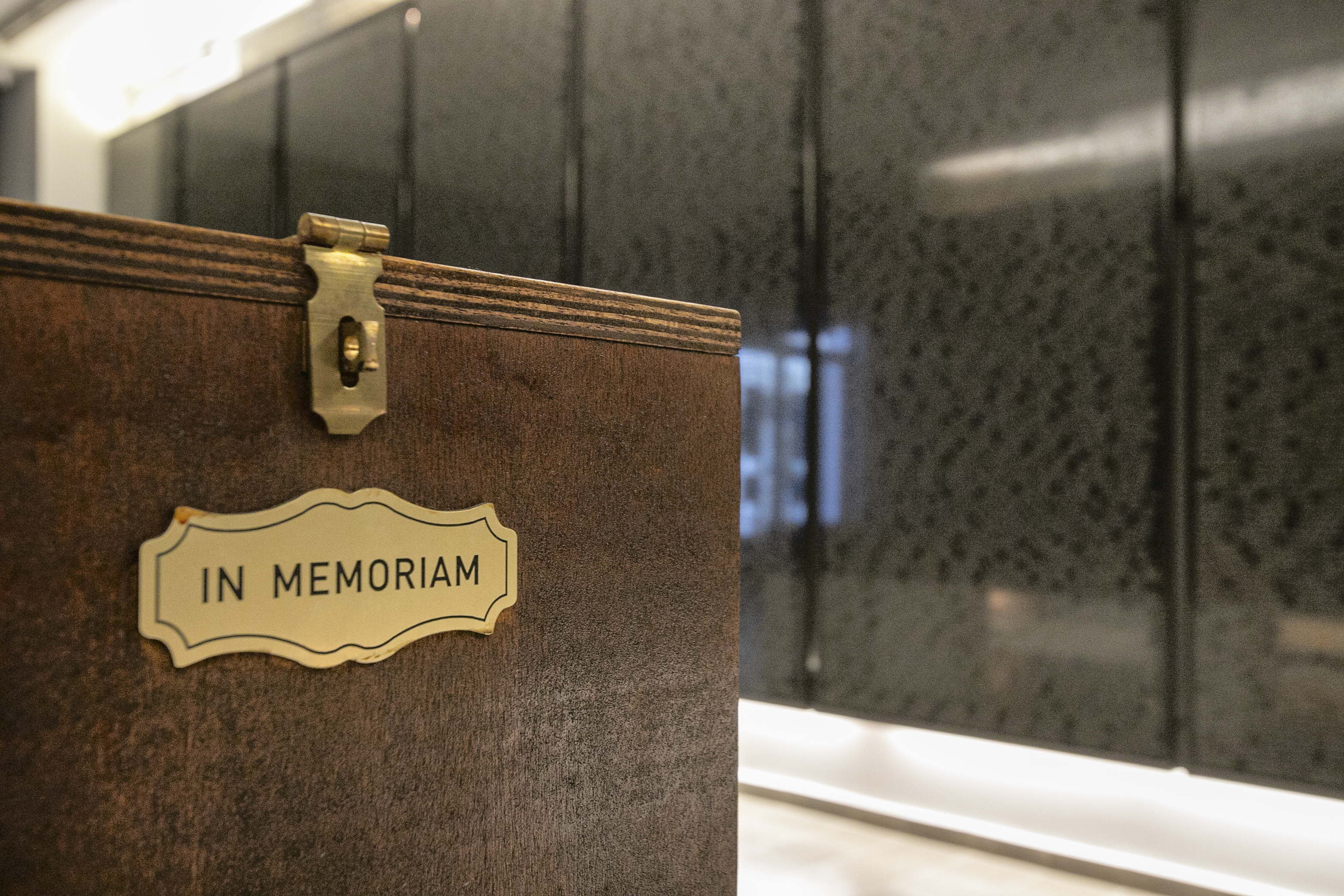
Since 2005, the Museum has collected a large number of documents and other evidence related to Jewish businesses in Thessaloniki through a special four-year research program.
Thanks to the help of experienced collectors, such as Mr. Yannis Megas, the Jewish Museum of Thessaloniki now has the most important collection of business documents from Thessaloniki, where Jewish-owned businesses were dominant until 1940.
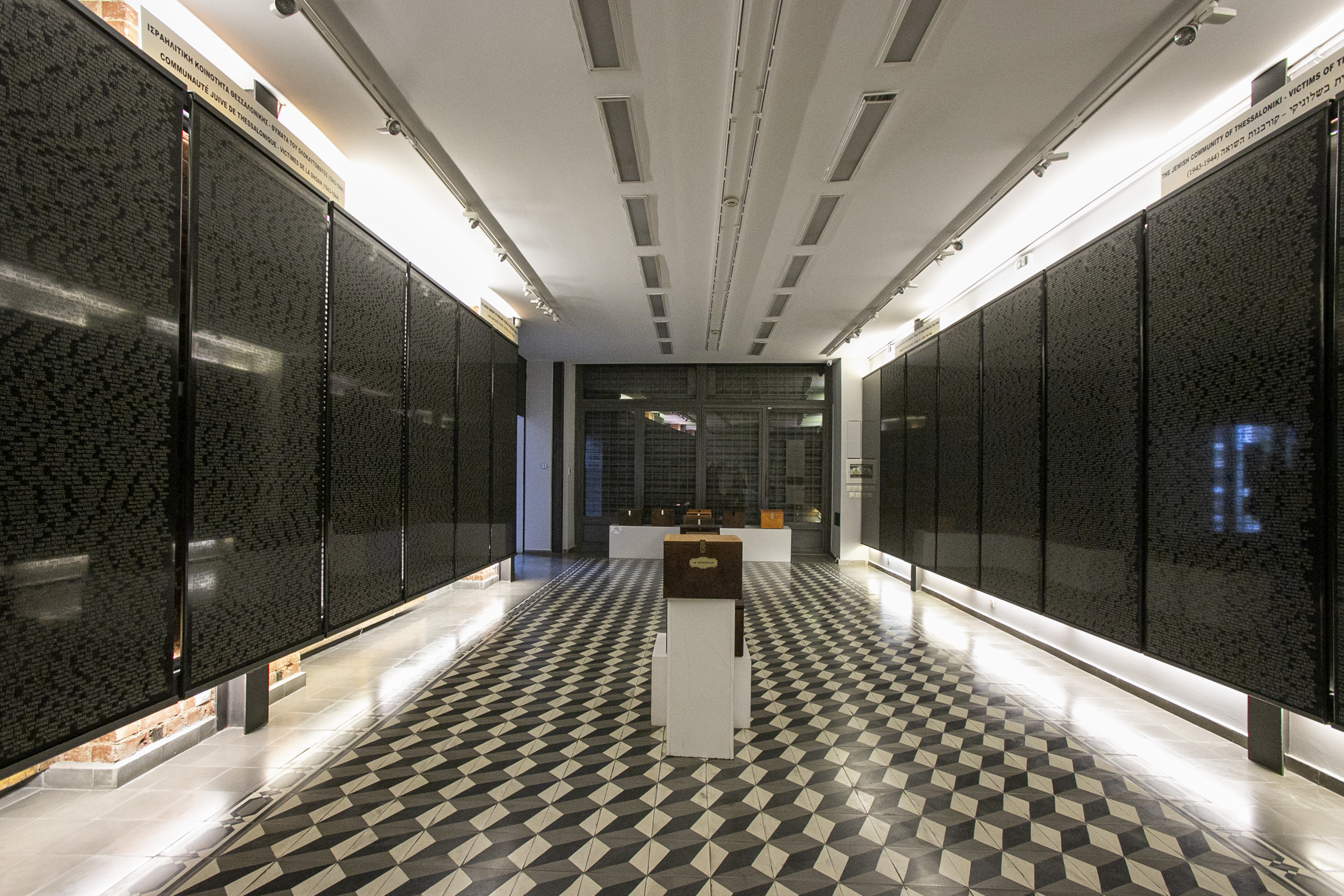
The Jewish Museum of Thessaloniki’s most recent acquisition is an electronic catalog of over 50,000 Thessaloniki Jews who were exterminated in death camps, the product of many years of work by Mr. H. Kounio, who was himself a prisoner.
In addition to its permanent collections, the Jewish Museum organizes periodic exhibitions of historical content to highlight the history of Thessaloniki and the Jewish presence through a contemporary lens. Such exhibitions included the presentation of a small part of the collection of business documents, as well as the presentation of representative documents from the surviving pre-war archive of the Jewish Community of Thessaloniki. A recent exhibition with the same theme focused on the unknown athletic presence of Jews in Thessaloniki and their contribution to Greek sports (the first goal scored by the national team in an official match was scored by a Jewish player from Thessaloniki). A publication is issued for each exhibition to document the effort.
Finally, the Museum regularly organizes lecture series on specific topics presented by graduate students and young researchers.
In its daily operations, the Museum welcomes a large number of visitors from abroad, especially fellow believers who come to Thessaloniki in search of their family or historical roots. During the winter and spring months, the Museum staff welcomes dozens of school classes from various areas of Thessaloniki. The students are informed about local history and the Jewish presence by the Museum staff in collaboration with their teachers.
The documentation, photography, and detailed cataloging of objects—both existing and new donations—included in the Museum’s collections, as well as the cataloging of the collection of rare Jewish books, are the invisible but valuable tasks carried out by the staff.
The Jewish presence in Thessaloniki is as old as the city itself. By studying the Jewish presence, the Museum highlights the modern history of Thessaloniki. This is the philosophy that governs both the operation of the Museum and its long-term program.
For more information, visit the museum’s website:
Jewish Museum of Thessaloniki